Showing posts with label nasa. Show all posts

Monday, November 23, 2015

FRIENDS!!!PART1/8-- A Blueprint for the Universe(The Origin, History, Evolution & Future of the Universe)

Credit: Illustration: Karl Tate; Galaxy M74: NASA, ESA, and Hubble Heritage Collaboration; "Awakening of the Pilgrim" by Camille Flammarion
Our universe is both ancient and vast, and expanding out farther and faster every day. This accelerating universe, the dark energy that seems to be behind it, and other puzzles like the exact nature of the Big Bang and the early evolution of the universe are among the great puzzles of cosmology.

There was a time when scientists thought Earth was at the center of the universe(GeocentricTheory). Now Helio-Centric Theory-Sun is at the centre of  our SOLAR SYSTEM. As late as the 1920s, we did not realize that our galaxy was just one of many in a vast universe. Only later did we recognize that the other galaxies were running away from us — in every direction — at ever greater speeds. Likewise in recent decades, our understanding of the universe has accelerated.
PART1-BLUE PRINT OF THE UNIVERSE:The universe is filled with stars, galaxies, planets and more, plus a veritable buffet of invisible stuff like dark matter astronomers have yet to see. But scientists have pinned down some of the major ingredients of our universe. Take a look at star stuff and more in this video show.


This still from a NASA video shows a snapshot of the universe as simulated by NASA's Pleiades supercomputer, the seventh fastest in the world. The Bolshoi universe simulation is the most realistic view of the universe to date and was released in late September 2011.

The universe is a big place, near-infintely big, but there's a structure to our cosmos that astronomers are hard at work unraveling. Take a tour of some of the out-of-this-world structures that make our universe tick in this video show, "A Blueprint for the Universe."
Episode 1: The Way of Things
Episode 2: The Dark Force
Episode 3: Yesterday's News
Episode4:Ede Of Unknown
Episode5:The Matter of Matter
Episode 6: The Grand Architecture
Episode 7: Galaxy Collision
Episode 8: Galactic Live
Episode 9: The Tully Collection
Episode 10: Beyond the Event Horizon
Episode 11: Galaxy: Home
Episode 12: Extra-Solar Worlds
Episode 13: Jewels and Junk
Episode 14: Birth in the Family of Sol
Episode 15: The Perfect Ballet
Episode 16: Rivers in the Sky
Episode 17: Know Your Place
Episode 18: From Radar to Redshift
Episode 19: Your Universe

FRIENDS!!!! Do YOU want to know"How the universe evolved into what we see today?"Our universe is both ancient and vast, and expanding out farther and faster every day. This accelerating universe, the dark energy that seems to be behind it, and other puzzles like the exact nature of the Big Bang and the early evolution of the universe are among the great puzzles of cosmology.


NOTE: Unable to copy URLs of the above videos/even unable to upload videos--requested to type each episode Heading in YOUTube---Eg-The Way of Things,The Dark Force etc. Watch&Enjoy Really VERY INFORMATIVE&INTERESTING VIDEOS

SORRY for INCONVENIENCE
http://www.space.com/13352-universe-history-future-cosmos-special-report
http://www.space.com/13277-universe-blueprint-space-video-show.html

Tuesday, November 3, 2015

Jupiter Bumped Giant Planet Out of Solar System 4 Billion Years Ago-like an interplanetary chess game

Astrophysicists at the University of Toronto have found that a close encounter with Jupiter about four billion years ago may have resulted in another planet's ejection from the Solar System altogether.


This is Jupiter's Great Red Spot in 2000 as seen by NASA's Cassini orbiter. Credit: NASA/JPL/Space Science Institute


NASA's Pluto-bound New Horizons spacecraft snapped this image of Jupiter and its moon Io when the two crossed paths in 2008. Astronomers say Jupiter could have ejected another planet from our solar system without losing its moons.NASA/JHU-APL/Southwest Research Institute

The existence of a fifth giant gas planet at the time of the Solar System's formation -- in addition to Jupiter, Saturn, Uranus and Neptune that we know of today -- was first proposed in 2011. But if it did exist, how did it get pushed out?

For years, scientists have suspected the ouster was either Saturn or Jupiter.

Planet ejection occurs as a result of a close planetary encounter in which one of the objects accelerates so much that it breaks free from the massive gravitational pull of the Sun.

Cloutier and his colleagues turned their attention to moons and orbits, developing computer simulations based on the modern-day trajectories of Callisto and Iapetus, the regular moons orbiting around Jupiter and Saturn respectively.They then measured the likelihood of each one producing its current orbit in the event that its host planet was responsible for ejecting the hypothetical planet, an incident which would have caused significant disturbance to each moon's original orbit.

"Ultimately,found that Jupiter is capable of ejecting the fifth giant planet while retaining a moon with the orbit of Callisto.""On the other hand, it would have been very difficult for Saturn to do so because Iapetus would have been excessively unsettled, resulting in an orbit that is difficult to reconcile with its current trajectory." 


FRIENDS!!!It's like something out of an interplanetary chess game. Astrophysicists at the University of Toronto have found that a close encounter with Jupiter about four billion years ago may have resulted in another planet's ejection from the Solar System altogether.

http://www.ndtv.com/world-news
http://www.astronomy.com/news/2015/10
http://phys.org/news/2015-10-astrophysicists-jupiter-giant-planet-solar.html
http://www.sciencedaily.com/releases/2015/10/151029093627.htm

Saturday, October 31, 2015

NASA’s TIMED mission has confirmed a surprisingly fast carbon dioxide increase in Earth’s upper atmosphere using 14 years of data from a radiometer aboard the satellite.

The area near the surface of the earth can be divided up into four inter-connected "geo-spheres:" the lithosphere, hydrosphere, biosphere, and atmosphere. Scientists can classify life and material on or near the surface of the earth to be in any of these four spheres.

NASA Goddard manages the TIMED mission for the Heliophysics Division within the Science Mission Directorate at NASA Headquarters in Washington. The Johns Hopkins University Applied Physics Laboratory in Laurel, Maryland, built the spacecraft for NASA.

Credits: Instituto de AstrofĂ­sica de AndalucĂ­a


NASA’s TIMED mission, short for Thermosphere, Ionosphere, Mesosphere Energetics and Dynamics, has confirmed a surprisingly fast carbon dioxide increase in Earth’s upper atmosphere, raising questions about how different layers of the atmosphere are interconnected. Even more curious—though climate models predict carbon dioxide should increase more or less equally across the globe, in its 14 years of data collection, TIMED data revealed that the carbon dioxide in these upper layers, long thought to follow the same patterns across the globe, is increasing faster over the Northern Hemisphere.Though the Northern Hemisphere produces much more carbon dioxide because of its greater land area and population, scientists expect the difference to become negligible at such great heights due to diffusion and mixing.
Understanding the way carbon dioxide moves throughout the atmosphere is key, both for making accurate climate models and for planning spacecraft flight paths. Though carbon dioxide raises temperatures near Earth’s surface, it actually causes cooling in the upper atmosphere, reducing air density in these outermost reaches of the atmosphere and impacting spacecraft orbits.“We tend to separate them into different fields—lower atmosphere is Earth science, upper atmosphere is heliophysics—but we need to understand the atmosphere as a complete system.”

Before TIMED, the only measurements of carbon dioxide in the upper atmosphere were direct measurements from sounding rocket research flights and short-lived spaceborne sensors.

FRIENDS!!!
Though carbon dioxide raises temperatures near Earth’s surface, it actually causes cooling in the upper atmosphere, reducing air density in these outermost reaches of the atmosphere and impacting spacecraft orbits.NASA’s TIMED mission has confirmed a surprisingly fast carbon dioxide increase in Earth’s upper atmosphere using 14 years of data from a radiometer aboard the satellite.


http://www.nasa.gov/feature/goddard
http://geography.about.com/od/physicalgeography
https://www.google.com.sa

Japan Quake May Have Shortened Earth Days, Moved Axis."These changes in Earth's rotation are perfectly natural and happen all the time."  "People shouldn't worry about them."


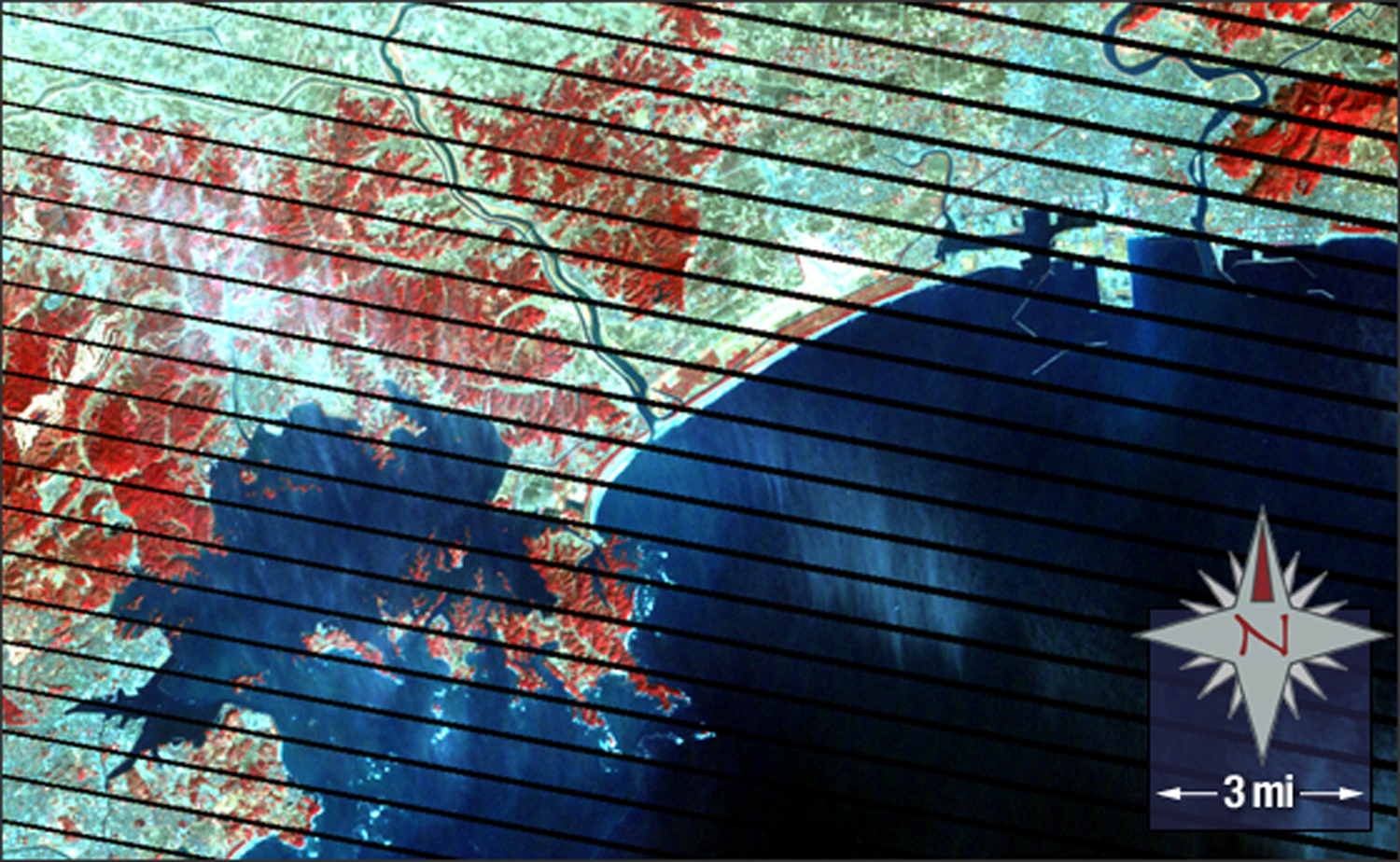
Landsat satellites have taken specialized digital photographs of Earth’s continents and surrounding coastal regions for over three decades, enabling people to study many aspects of our planet and to evaluate the dynamic changes caused by both natural processes and human practices.The Landsat Program is a series of Earth-observing satellite missions jointly managed by NASA and the U.S. Geological Survey. Since 1972, Landsat satellites have collected information about Earth from space. This science, known as remote sensing, has matured with the Landsat Program.

The March 11, 2011, great earthquake in Japan may have shortened the length of Earth days and shifted its axis. Image credit: NASA


The March 11, magnitude 9.0 earthquake in Japan may have shortened the length of each Earth day and shifted its axis. But don't worry—won't notice the difference.


BEFORE TSUNAMI

This false color image of Sendai, Japan was captured by the Landsat 7 ETM+ bands 4,3, and 2 on February 24, 2011. Credit: USGS/NASA, Mike Taylor
AFTER TSUNAMI

This false color image of Sendai, Japan was captured by the Landsat 7 ETM+ bands 4,3, and 2 on March 12, 2011 and shows inland areas inundated by water from the tsunami, smoke from fires burning, and clouds of debris in the water. Credit: USGS/NASA, Mike Taylor
Before and after images from the Landsat 7 satellite show the after effects of the tsunami that followed the 9.0 earthquake off of Japan's east coast last weekend. A side-by-side comparison reveals inland areas inundated by water from the tsunami, smoke from burning fires and clouds of debris in the water.The black lines in the image are data band gaps.

Using a United States Geological Survey estimate for how the fault responsible for the earthquake slipped, research scientist Richard Gross of NASA's Jet Propulsion Laboratory, Pasadena, Calif., applied a complex model to perform a preliminary theoretical calculation of how the Japan earthquake—the fifth largest since 1900—affected Earth's rotation. His calculations indicate that by changing the distribution of Earth's mass, the Japanese earthquake should have caused Earth to rotate a bit faster, shortening the length of the day by about 1.8 microseconds (a microsecond is one millionth of a second).

The calculations also show the Japan quake should have shifted the position of Earth's figure axis (the axis about which Earth's mass is balanced) by about 17 centimeters (6.5 inches), towards 133 degrees east longitude. Earth's figure axis should not be confused with its north-south axis; they are offset by about 10 meters (about 33 feet). This shift in Earth's figure axis will cause Earth to wobble a bit differently as it rotates, but it will not cause a shift of Earth's axis in space—only external forces such as the gravitational attraction of the sun, moon and planets can do that.

Both calculations will likely change as data on the quake are further refined.

In comparison,  magnitude 8.8 earthquake in Chile, Gross estimated the Chile quake should have shortened the length of day by about 1.26 microseconds and shifted Earth's figure axis by about 8 centimeters (3 inches). A similar calculation performed after the 2004 magnitude 9.1 Sumatran earthquake revealed it should have shortened the length of day by 6.8 microseconds and shifted Earth's figure axis by about 7 centimeters, or 2.76 inches. How an individual earthquake affects Earth's rotation depends on its size (magnitude), location and the details of how the fault slipped.

Anything that redistributes Earth's mass will change Earth's rotation.

"Earth's rotation changes all the time as a result of not only earthquakes, but also the much larger effects of changes in atmospheric winds and oceanic currents." "Over the course of a year, the length of the day increases and decreases by about a millisecond, or about 550 times larger than the change caused by the Japanese earthquake. The position of Earth's figure axis also changes all the time, by about 1 meter (3.3 feet) over the course of a year, or about six times more than the change that should have been caused by the Japan quake."

We can measure the effects of the atmosphere and ocean on Earth's rotation, the effects of earthquakes, at least up until now, have been too small to measure. The computed change in the length of day caused by earthquakes is much smaller than the accuracy with which scientists can currently measure changes in the length of the day. However, since the position of the figure axis can be measured to an accuracy of about 5 centimeters (2 inches), the estimated 17-centimeter shift in the figure axis from the Japan quake may actually be large enough to observe if scientists can adequately remove the larger effects of the atmosphere and ocean from the Earth rotation measurements. 

Gross said the changes in Earth's rotation and figure axis caused by earthquakes should not have any impacts on our daily lives. "These changes in Earth's rotation are perfectly natural and happen all the time."  "People shouldn't worry about them."

FRIENDS!!!Japan Quake May Have Shortened Earth Days, Moved Axis."These changes in Earth's rotation are perfectly natural and happen all the time."  "People shouldn't worry about them."

 For more information about Landsat, visit: http://landsat.gsfc.nasa.gov/.
http://www.nasa.gov/topics/earth/features

Saturday, October 24, 2015

NASA Completes Critical Design Review for Space Launch System


NASA Completes Critical Design Review for Space Launch System

Artist concept of the Block I configuration of NASA’s Space Launch System (SLS). The SLS Program has completed its critical design review, and the program has concluded that the core stage of the rocket will remain orange along with the Launch Vehicle Stage Adapter, which is the natural color of the insulation that will cover those elements.


Credits: NASA
For the first time in almost 40 years, a NASA human-rated rocket has completed all steps needed to clear a critical design review. Our Space Launch System (SLS) is the first vehicle designed to meet the challenges of our #JourneyTo Mars and the first exploration class rocket since the Saturn V.

Space Launch System--Expanded view

Learn more about SLS: http://go.nasa.gov/1RqKJkH

https://www.nasa.gov/press-release

Tuesday, October 20, 2015

ATTENTION!!!A scary 1.5 mile-wide (2.5km) asteroid is set to make a 'close' encounter with Earth(but don't panic, it will still be 310,000 miles away)

Nasa predicts 'near miss' with scary asteroid on Halloween Night(but don't panic, it will still be 310,000 miles away)
What To Expect
Asteroid 2015 TB145 is expected to reach its closest approach to Earth at about 1:18 pm Eastern. It'll blast past us at a speed of about 78,300 miles an hour, and should be bright enough to see with a decent telescope and a star chart.

Artist's view of an asteroidLucas/Flickr CC By 2.0


Pan-STARRS is one of few telescopes whose main goal is to search for comets and asteroidsForest Starr and Kim Starr/Flickr CC By 2.0

Rendering of the Large Synoptic Survey TelescopeLSST

The asteroid's proximity will give scientists an excellent chance to study it. Scientists hope to image it with a resolution as high as 6.5 feet (2 meters) per pixel, and radar measurements will help shed light on the asteroid's precise size and composition. So far all we really know is that it's somewhere around 1,050 to 2,100 feet (320 to 640 meters) in diameter.

The 'asteroid' could be a dead comet.


Vesta gave us a good look at what an asteroid looks like.NASA/JPL-Caltech/UCLA/MPS/DLR/IDA

  • Asteroid 2015 TB145 is believed to be around 1.5 miles (2.5 km) wide
  • An asteroid just quarter-of-a-mile wide could cause global devastation
  • 2015 TB145 will pass 1.3 times the distance from the Earth to the moon
  • Despite its size, Nasa has said the rock 'poses no threat' of impact
The asteroid will be plenty far away, but still close enough for researchers to get excited about imaging it. NASA notes that the fast-moving object "may be cometary in nature." If that's the case, it could be made up of rock, ice and dust, whereas asteroids consist mainly of rock and metals.

The space rock, named 2015 TB145, will safely fly past our planet at 78,000mph (125,500km/h) at 310,000 miles (499,000km) away.
While there's no danger to Earth, Nasa has described the asteroid as 'hazardous' as it comes 4,600,000 mile (7,403,00km) threshold of proximity to our planet. 


That's around 1.3 times the distance between the Earth   and the moon, allowing anyone with a telescope to see the event.


The asteroid, named 2015 TB145, will make its closest approach to Earth on 11:14 a.m. ET (3:14 pm GMT) on October 31, and can be seen by anyone using a telescope.

The 'high velocity' Halloween asteroid's closest approach will take place on 11:14 a.m. ET (3:14 pm GMT) on October 31.

It will be the closest approach to Earth since July 2006 and scientists believe we probably won't see another large asteroid come this close to the planet until 2027.

While there's no danger to Earth, Nasa has described the asteroid as 'hazardous' as it comes 4,600,000 mile (7,403,00km) threshold of proximity to our planet.

The asteroid was spotted by Nasa a fortnight ago, which is relatively short notice for the space agency.
FRIENDS!!! WATCH with TELESCOPE --Nasa predicts 'near miss' with scary asteroid on Halloween (but don't panic, it will still be 310,000 miles away) --The asteroid, named 2015 TB145, will make its closest approach to Earth on 11:14 a.m. ET (3:14 pm GMT) on October 31
'The asteroid is on an extremely eccentric and a high inclination orbit,' the space agency explained.

'This is the closest approach by a known object this large until 1999 AN10 approaches within 1 lunar distance in August 2027'

Because of its erratic orbit, Nasa isn't sure where it will go, but the space agency says it's confident it will not hit Earth.

It comes just weeks after doomsdayers claimed the end of the world was nigh after Nasa revealed a giant asteroid is heading towards the planet.

Called Asteroid 86666 (2000 FL10), the 1.5-mile wide (2.5km) space rock made its closest pass on 10 October.
Then there were assertions surrounding the end of the Mayan calendar on 21 December 2012, insisting the world would end with a large asteroid impact.

Earlier this year, asteroids 2004 BL86 and 2014 YB35 were also said to be on dangerous near-Earth trajectories, but their flybys in January and March went without incident.
Asteroid 86666 (2000 FL10) made its closest pass on 10 October (illustrated). An asteroid of its size has the potential to cause global devastation if it was to hit Earth but Nasa said at the time it posed no threat to Earth
FRIENDS!!! WATCH with TELESCOPE --The asteroid, named 2015 TB145, will make its closest approach to Earth on 11:14 a.m. ET (3:14 pm GMT) on October 31


For more information
http://www.dailymail.co.uk/sciencetech/article-3279668

Saturday, October 17, 2015

Friends!!!Do U want to know RECENT observations about OUR MAIN SOURCE of LIFE&ENERGY--SUN!!!

ESA'S FLEET IN THE SOLAR SYSTEM

Depicts: ESA Solar System missionsCopyright: ESAThis poster depicts the fleet of ESA spacecraft that are exploring the Solar System.

Depicts: ESA astrophysics missionsCopyright: ESAThis poster depicts the astrophysics missions of ESA and their observational coverage across the electromagnetic spectrum.

http://sci.esa.int/education

SDO - Mission Overview

The Solar Dynamics Observatory (SDO) will be taking a closer look at the Sun, the source of all Space Weather. Space Weather affects not only our lives here on Earth, but the Earth itself, and everything outside its atmosphere (astronauts and satellites out in space and even the other planets).
The Sun, our closest star, is still a great mystery to scientists. SDO will help us understand where the Sun's energy comes from, how the inside of the Sun works, and how energy is stored and released in the Sun's atmosphere... yes, the Sun has an atmosphere! By better understanding the Sun and how it works, we will be able to better predict and better forecast the "weather out in space" providing earlier warnings to protect our astronauts and satellites floating around out there.

Many satellites share a ground system (place on the ground where they send data and photographs) and have recording systems to save the data collected until they can talk to their ground station. Because SDO has no recording system and will be collecting so much data, the SDO mission has to build its very OWN ground station. For this to be possible, SDO has to be placed in a geosynchronous orbit (GEO). This means that it will rotate at the same speed as the Earth and will always be directly above and in constant communication with its ground station in New Mexico.


Hefty Prominence Eruption Observed by SDO
watch the VIDEO
https://youtu.be/QdXB07FAJpk

A mass of solar material gathered itself into a twisting mass, spun around for a bit, then rose up and broke apart over a 10-hour period on Oct. 13, 2015. Prominences are unstable clouds of gas tethered above the surface of the sun by magnetic forces. 

Coronal Hole Front and Center
Fast Solar Wind Causes Aurora Light Shows

The dark area across the top of the sun in this image is a coronal hole, a region on the sun where the magnetic field is open to interplanetary space, sending coronal material speeding out in what is called a high-speed solar wind stream. The high-speed solar wind originating from this coronal hole, imaged here on Oct. 10, 2015, by NASA's Solar Dynamics Observatory, created a geomagnetic storm near Earth that resulted in several nights of auroras. This image was taken in wavelengths of 193 Angstroms, which is invisible to our eyes and is typically colorized in bronze.

NASA's SDO Sees Sun Emit Mid-Level Flare Oct. 1


NASA’s Solar Dynamics Observatory, which watches the sun constantly, captured an image of the event. Solar flares are powerful bursts of radiation. Harmful radiation from a flare cannot pass through Earth's atmosphere to physically affect humans on the ground, however -- when intense enough -- they can disturb the atmosphere in the layer where GPS and communications signals travel.

NASA's Solar Dynamics Observatory captured this image of a solar flare – as seen in the bright flash on the lower right limb of the sun – at 8:12 p.m. EDT on Oct. 1, 2015. The image is a blend of three wavelengths of extreme ultraviolet light that have been colorized.Credits: NASA/SDO
SDO Views Active Region Loops
Credit: NASA/SDO
NASA's SDO Captures Image of Mid-Class Solar Flare


NASA's Solar Dynamics Observatory captured this image of a solar flare – as seen in the bright flash in the lower right hand side of the sun – on Sept. 28, 2015. The image shows a subset of extreme ultraviolet light that highlights the extraordinarily hot material in flares and which is typically colorized in red.Credits: NASA/SDO
SDO Sees 3 Coronal 'Holes'
Coronal holes are areas where the sun's magnetic field lines extend out into space and don't return to the sun.  This creates what's called an open magnetic field, which is a source of solar particles streaming off the sun, known as the solar wind.
NASA's SDO Catches a Double Photobomb

NASA’s Solar Dynamics Observatory captured this image of Earth and the moon transiting the sun together on Sept. 13, 2015. The edge of Earth, visible near the top of the frame, appears fuzzy because Earth’s atmosphere blocks different amounts of light at different altitudes. On the left, the moon’s edge is perfectly crisp, because it has no atmosphere. This image was taken in extreme ultraviolet wavelengths of 171 angstroms. Though this light is invisible to our eyes, it is typically colorized in gold.Credits: NASA/SDO
SDO Captures Images Of Mid-Level Solar Flares

NASA's SDO captured images of three mid-level solar flares March 7-9, 2015, all from the same active region on the surface of the sun, sunspot AR2297. This image of the flares shows a wavelength of EUV light that highlights the intense heat of a solar flare and that is typically colorized in teal.Credits: NASA/SDO
NASA's SDO Shows Moon Transiting the Sun

The moon partially obscured the view of the sun from NASA's Solar Dynamics Observatory, or SDO, on Nov. 22, 2014. This lunar transit was visible only from SDO's point of view.Credits: NASA/SDO

This animated gif shows how the moon passes in between NASA's Solar Dynamics Observatory and the sun, partially obscuring the view.Credits: NASA/SDO

By blending different SDO wavelengths, we can get an enhanced image of the sun. The left image was taken in 304 wavelength, the middle in 171 wavelength, and the right shows the blended result.Credits: NASA/SDO

SUNRISE Offers New Insight on Sun's Atmosphere

The right image shows an image captured by the Sunrise balloon-borne telescope of a region of the chromosphere in close proximity to two sunspots. It serves as a close up of the left images, which were captured by NASA's Solar Dynamics Observatory. The images were taken on July 16, 2013.Credits: NASA/SDO/MPS

Two images of the chromosphere as captured by the Sunrise solar observatory that flew on a NASA balloon in July 2013. On the left a typical pattern can be seen: dark areas surrounded by bright rims. On the right, the images show bright, stretched structures on the edges of the darker sunspots.Credits: MPS
Why NASA Studies the Ultraviolet Sun

Spacecraft record solar activity as a binary code, 1s and 0s, which computer programs can translate into black and white. Scientists colorize the images for realism, and then zoom in on areas of interest.Credits: NASA/Karen Fox

Four of the telescopes on the Solar Dynamics Observatory observe extreme ultraviolet light activity on the sun that is invisible to the naked eye.Credits: NASA/SDO

The Solar Dynamics Observatory observed a solar flare (upper left) and a coronal mass ejection (right) erupting from the sun’s limb in extreme ultraviolet light on August 6, 2010.Credits: NASA/SDO
FRIENDS!!!!! The Sun, our closest star, is still a great mystery to scientists help us understand where the Sun's energy comes from, how the inside of the Sun works, and how energy is stored and released in the Sun's atmosphere to better predict and better forecast the "weather out in space" providing earlier warnings to protect our astronauts and satellites floating around out there!

For more information
http://www.nasa.gov/content

Friends!!! Are U interested to know more about DWARF Pluto's Geology?


Take a pinch of Mars, a sprinkle of Saturn’s moon Iapetus and a dash of Neptune’s moon Triton—and the recipe will yield something like Pluto.


NASA’s New Horizons spacecraft combines blue, red and infrared images taken by the .
Credit: NASA/JHUAPL/SwRI


The first published scientific findings from NASA’s New Horizons mission, which flew past Pluto in July, confirm that the dwarf planet does not resemble any other single world in the Solar System. Instead, its wildly varying terrain is a crazy quilt of geological patterns and textures—copied, pasted and tweaked from other planets and moons.


Like Mars, Pluto has volatile compounds that cycle between freezing onto the ground and sublimating back into the atmosphere. Like Iapetus, it has stunningly bright terrain juxtaposed with dark areas. And like Triton, it seems to have streaks made by wind marring its icy surface.

Pluto’s geological activity is driven both by heat leaking from radioactive elements in its interior—a remnant of its birth more than 4 billion years ago—and by the volatile compounds that flit between its surface and its atmosphere. As Pluto moves away from the Sun in its 248-year elliptical orbit, temperatures plummet and these compounds freeze out of the atmosphere and fall onto the surface as frost. When Pluto warms up again, methane, nitrogen, carbon monoxide and other chemicals transform directly from ice on the surface into atmospheric gases.

 “Punching a hole in jello springs to mind,” says Howett. “Everything suggests this ice is exceptionally soft”—making it unique in the Solar System.

Incredible New Photos Of Pluto Show Blue Skies And Water Ice
Pluto's Blue Sky

"A blue sky often results from scattering of sunlight by very small particles," said science team researcher Carly Howett, also of SwRI. "On Earth, those particles are very tiny nitrogen molecules. On Pluto they appear to be larger – but still relatively small – soot-like particles we call tholins."

Water ice on Pluto. NASA/JHUAPL/SwRI

As if blue haze wasn’t exciting enough, New Horizons had another surprise for us this week: water ice on Pluto’s surface. While there aren’t large areas of exposed ice, there are many small regions.


Pluto’s Puzzling Patterns and PitsCredits: NASA/JHUAPL/SwRI
It seems that the more we see of Pluto, the more fascinating it gets. With its prominent heart-shaped feature, icy mountains, and “snakeskin” terrain.

Pluto's Tiny Moons Start Coming Into View


Charon is the biggest game in town, but Pluto has four smaller moons that make for a complicated system.
NASA / JHUAPL
Pluto‬ system family portrait!

Kerberos Revealed. This image of Kerberos was created by combining four individual Long Range Reconnaissance Imager (LORRI) pictures taken on July 14, approximately seven hours before New Horizons’ closest approach to Pluto, at a range of 245,600 miles (396,100 km) from Kerberos. The image was deconvolved to recover the highest possible spatial resolution and oversampled by a factor of eight to reduce pixilation effects. Kerberos appears to have a double-lobed shape, approximately 7.4 miles (12 kilometers) across in its long dimension and 2.8 miles (4.5 kilometers) in its shortest dimension.Credits: NASA/JHUAPL/SwRI

FRIENDS !!! Be CURIOUS!!! OBSERVE!!! ONE DAY U will also DISCOVER something!!!
For more information
http://www.scientificamerican.com/article
http://www.iflscience.com/space/
http://www.popularmechanics.com/space/

Monday, October 12, 2015

Watch Fascinating Illusions and Pareidolia--Top 10 Weirdest Mars Illusions and Pareidolia

Pareidolia  is a psychological phenomenon involving a stimulus (an image or a sound) wherein the mind perceives a familiar pattern where none actually exists.

Pareidolia can cause people to interpret random images, or patterns of light and shadow, as faces. A psychological phenomenon that stimulates a vague perception is known as Pareidolia. The word ‘Pareidolia’ comes from the Greek language and it means ‘wrong image’. It can be anything that triggers the brain to misperceive the most random image in our surroundings, which can be as random as seeing a face in the clouds, a rabbit in the moon or hearing a hidden message when a recorded audio is played in reverse. Such strange coincidences are inevitable and are impossible to resist.

This occurrence was first associated with psychotic people, but today scientists describe it as a natural tendency of human beings to search for meanings in our environment, since they are hardwired in our brains. Our brains have the ability to distinguish a face from any irrelevant objects in just one-fifth of a second. This activity is performed in an area of the brain called the fusiform gyrus, which arouses the need to recognize familiarly acquainted images. Sometimes, these illusions can be so convincing that people are compelled to turn illusions into delusions.


Common examples are perceived images of animals, faces, or objects in cloud formations, the "man in the moon", the "moon rabbit", and hidden messages within recorded music played in reverse or at higher- or lower-than-normal speeds.

Top 10 Weirdest Mars Illusions and Pareidolia

Ever since Italian astronomer Giovanni Schiaparelli described his discovery of canals on Mars in 1877 and American astronomer Percival Lowell started to map them, we humans have been fascinated with the Red Planet. Although the canals were nothing more than a case of mistaken identity and our technology has come a long way since Schiaparelli and Lowell's telescopes, Mars continues to serve up its fair share of illusions, hoaxes and misunderstandings.In the case of Mars, pareidolia makes us see bigfoot, parrots, flowers and faces in the otherwise barren orange landscape.


10) A Volcanic Elephant
"The Mars Elephant" -- NASA Mars Reconnassance Orbiter (HiRISE), 2012 NASA/JPL-CALTECH/UNIV. OF ARIZ

9) Rolling Stones Logo
Rolling Stones Logo -- NASA Mars Reconnassance Orbiter (HiRISE), 2011 NASA/JPL-CALTECH/UNIV. OF ARIZ.
8) The "Morchid"
The Mars Flower' -- NASA Mars Science Laboratory, 2012 NASA/JPL-CALTECH

7) The Smiling Crater
The Smiling Crater" -- NASA Mars Global Surveyor, 1999 NASA
6) A Dead Parrot
"The Mars Parrot" -- NASA Mars Global Surveyor, 2002 NASA/JPL-CALTECH
5) Alien Artifacts
Alien artifacts? -- NASA Mars Exploration Rover Opportunity, 2008 NASA/JPL-CALTECH
4) Bigfoot! (Littlefoot?)
"Mars Bigfoot" (a.k.a. "Mars Yeti") -- NASA Mars Exploration Rover Spirit, 2008 NASA/JPL-CALTECH
3) The Tree-Lined Hills of Mars
Trees on Mars? -- NASA Mars Reconnassance Orbiter (HiRISE), 2011 NASA/JPL-CALTECH/UNIV. OF ARIZ.
2) Mars Rat, Possibly a Gopher
The Mars Rat" -- NASA Mars Science Laboratory, 2012 NASA/JPL-CALTECH
1) The Face of Mars

'The Face of Mars' -- NASA Viking 1 Orbiter, 1976 NASA/JPL-CALTECH


                            FRIENDS!!!!! Are they FASCINATING??????

So, the next time you see a face in your soup or a horse in the clouds, be sure it is nothing, but a Pareidolia occurring to you!

For more best Pareidolia images taken from our surroundings, which will definitely bring a smile on your face!!!!!
VISIT
http://www.fiboni.com/2013/09/pareidolia-illusions-at-their-best/


Ref;
https://en.wikipedia.org/wiki/Pareidolia
http://news.discovery.com/space/history-of-space