Sunday, November 8, 2015

ATTENTION -FRIENDS!!!NEED of the HOUR the effect of GLOBAL WARMING-CLIMATE CHANGE--Frightening 'meteorological event dubbed a 'cloud tsunami' hit Sidney, measured several kms in length shocks Australians-


Frightening 'cloud tsunami' shocks Australians; dramatic pictures go viral on social media

“Massive ‘cloud tsunami’ stuns Australians”

Sudneyhites on Saturday witnessed a nightmare when they saw a sea of cloud making rounds in sky. The seen which was like a ‘cloud Tsunami’ terrified the viewers as many called  it as natural disaster.
The ‘tsunami’ was actually in a form a huge shelf cloud which signalled the onset of severe storms. After the incident, some dramatic photos went viral on the social media.

Though some found it exciting also, “WOW! Storm and shelf cloud seen Friday in Sydney, Australia.” an eye-witness Tweeted.


“A meteorological event dubbed a ‘cloud tsunami’ hit Sidney, measured several kms in length”  
Wicked ‘cloud tsunami’ hit Sidney
FRIENDS!!!NEED of the HOUR the effect of GLOBAL WARMING-CLIMATE CHANGE--Frightening 'meteorological event dubbed a 'cloud tsunami' hit Sidney, measured several kms in length shocks/stuns Australians.


https://twitter.com/MerittCo
http://www.newsnation.in/article

Saturday, November 7, 2015

FRIENDS-Join HANDS to SHOWER Tributes to the man behind Raman Effect, Nobel Laureate in PHYSICS & Bharat Ratna Sir CV Raman on his 127th birth anniversary.


Sir Chandrasekhara Venkata Raman,  (7 November 1888 – 21 November 1970) was an Indian physicist, born in the former Madras Province, discovered that, when light traverses a transparent material, some of the deflected light changes in wavelength called Raman Effect earned him the 1930 Nobel Prize for Physics. In 1954, he was honoured with the highest civilian award in India, the Bharat Ratna.


During a voyage to Europe in 1921, Raman noticed the blue colour of glaciers and the Mediterranean sea. He was motivated to discover the reason for the blue colour. Raman carried out experiments regarding the scattering of light by water and transparent blocks of ice which explained the phenomenon.
Raman employed monochromatic light from a mercury arc lamp which penetrated transparent material and was allowed to fall on a spectrograph to record its spectrum. He detected lines in the spectrum which he later called Raman lines. He presented his theory at a meeting of scientists in Bangalore on 16 March 1928, and won the Nobel Prize in Physics in 1930.

Raman Effect: fingerprinting the universe

Raman's discovery has finally become a breakthrough technology. Hand-held scanners called Raman scanners, weighing just one-third of a kilo, are being used by US narcotics squads and airports to detect drugs.

 Security experts think that Raman scanners may be the best devices to detect explosives carried by terrorists. 

Safety inspectors are using Raman scanners to detect hazardous chemicals and gases.
 Police forces are using Raman scanners for forensic work.

Researchers at UCLA and Intel have incorporated the Raman Effect on silicon. Because of its crystalline structure, the Raman Effect is 10,000 times stronger in silicon than glass. Researchers at JPL and Caltech have found other ways to increase laser efficiency. This has driven down size and costs.

Researchers at Stanford University are experimenting with Raman scanners to diagnose cancers in various organs. River Diagnostics in Rotterdam is marketing a bacteria analyzer that hospitals can use to instantly detect deadly pathogens. One day, Raman scanners may make blood tests obsolete: a scan may suffice to tell you the content of glucose, cholesterol, uric acid and other elements in  blood.

Every molecule has a different Raman pattern. This is why Raman scanning has been called the fingerprinting of the universe: it can identify substances as surely as fingerprints can identify humans.
Identifying the chemical composition of a substance typically requires chemical and physical tests that take time, maybe days. They typically require a sample to be extracted and destroyed while testing. But Raman scanning can take just 20 seconds. It does not require cutting, extracting or destroying a substance. Scanners have a laser, spectroscope and an electronic heart that can recognize Raman patterns. This yields almost instant recognition of target substances.

For instance, narcotics squads in the US are using Raman scanners programmed to detect up to 100 drugs. At the scene of a crime, or during airport security checks, the scanner can tell whether a substance is heroin, crack cocaine, amphetamine, or plain chalk. Security experts can programme scanners to detect different sorts of explosives such as RDX or nitroglycerine.


FRIENDS-Join Hands to SHOWER Tributes to the man behind Raman Effect, Nobel Laureate & Bharat Ratna Sir CV Raman on his 127th birth anniversary.Scientists aim ultimately to create a database of Raman patterns of every substance for easy identification. This is similar to Nandan Nilekani creating a national database for fingerprints and irises to identify every Indian. Databases have already been created for narcotics, pollutants and explosives, which is why scanners have already become practical tools. Every time they are used to catch a drug smuggler or terrorist, or to detect a cancer or pollutant, we can give thanks to CV Raman. Science teachers can now teach students why exactly the Raman Effect is so important: it fingerprints the universe.

https://en.wikipedia.org/wiki/C._V._Raman
http://articles.economictimes.indiatimes.com
@prasarbharati

FRIENDS--Brush up your knowledge on Marie Curie, born on this day 148 years ago: 7 November 1867. She is the only individual that has been awarded the ‪#‎NobelPrize‬ both in Physics (1903) and Chemistry (1911).

Marie Curie --Marie Curie, born on this day 148 years ago: 7 November 1867.
She is the only individual that has been awarded the ‪#‎Nobel Prize‬ both in Physics (1903) and Chemistry (1911).
The Republic of Togo thought Frontczak was indeed Marie Curie, on this stamp made in 2011 on the 100th anniversary of Curie's Nobel Prize in chemistry.


Question: When was Marie Curie born?

Answer: Marie Curie was born on 7 November 1867.


Question: When did she die?

Answer: Marie Curie died on 4 July 1934, in Savoy, France. She died of aplastic anaemia, a blood disease that often results from exposure to large amounts of radiation.


Question: Where was she born?

Answer: She was born in Warsaw, now the capital of Poland, but at that time the city belonged to the Russian Empire.

Question: What was her maiden name?

Answer: Her maiden name was Maria Sklodowska. She was also called 'Manya' by her family and friends. She later changed her name to 'Marie' when she moved to Paris, France in later years.


Question: What was her family background?

Answer: Marie had four brothers and sisters. Both her parents were teachers. Her father was a patriot whose views about an independent Poland often made it difficult for him to keep his job. When Marie was 11 years old, her oldest sister died of typhus and her mother of tuberculosis.


Question: What was her educational background?

Answer: Marie finished high school at 15, with the highest honours. She worked as a private tutor for children in Poland before moving to Paris, France at the age of 24 to study mathematics and physics at the Sorbonne. Her goal was to get a teacher's diploma and return to Poland.


Question: Why did she not return to Poland?

Answer: Marie stayed in France after she met a French scientist, Pierre Curie, in the spring of 1894. Pierre was the head of a laboratory at the School of Industrial Physics and Chemistry. She later married Pierre and they had two daughters, Irène, born in 1897, and Eve, born in 1904. Marie and Pierre worked together in the laboratory, which later resulted in a Nobel Prize in Physics in 1903, making Marie Curie the first woman to receive the Nobel Prize.


Question: What was the 1903 Nobel Prize in Physics awarded for?

Answer: Henri Becquerel was awarded half of the prize for his discovery of spontaneous radioactivity. Marie and Pierre Curie were awarded half the prize for their research on the radiation phenomena discovered by Becquerel.


Question: What did Marie Curie discover?

Answer: Marie Curie studied the radiation of all compounds containing the known radioactive elements, including uranium and thorium, which she later discovered was also radioactive. She also found out that: 
- can exactly measure the strength of the radiation from uranium;
- the intensity of the radiation is proportional to the amount of uranium or thorium in the compound - no matter what compound it is;
- the ability to emit radiation does not depend on the arrangement of the atoms in a molecule; it must be linked to the interior of the atom itself - a revolutionary discovery!

 In 1898 the Curies discovered two new radioactive elements: radium (named after the Latin word for ray) and polonium (named after Marie's home country, Poland). 


Question: Was she awarded another Nobel Prize?

Answer: Yes, Marie Curie was awarded the 1911 Nobel Prize in Chemistry for her discoveries and studies of the elements  radium and polonium. She is the only woman so far, who has been awarded the Nobel Prize twice.


Question: Were there other members of Marie Curie's family who were awarded the Nobel Prize?

Answer: Yes, Marie and Pierre's (who died in an accident in 1906) daughter, Irène Joliot-Curie, was awarded the 1935 Nobel Prize in Chemistry, sharing it with her husband, Frédéric Joliot, for their synthesis of new radioactive elements.


FRIENDS!!! brush up about Marie Curie, born on this day 148 years ago: 7 November 1867.
She is the only individual that has been awarded the ‪#‎NobelPrize‬ both in Physics (1903) and Chemistry (1911)&died of aplastic anaemia, a blood disease that often results from exposure to large amounts of radiation.

http://www.nobelprize.org/nobel_prizes
http://www.popsci.com/article/science

Friday, November 6, 2015

What's Up in the Solar System diagrams by Olaf Frohn

The InSIGHT mission announced the downselection to one candidate landing site on Mars. The site is the one named E09 in this 2014 Lunar and Planetary Science Conference abstract, an ellipse 130 kilometers east-west and 27 kilometers north-south, centered at 4.46°N, 136.04°E. The InSIGHT launch period opens in a year, on March 4, 2016.

Finally, the OSIRIS-REx mission has received permission to proceed with spacecraft assembly. The mission is aiming for a September 2016 launch.

The Planetary Society publishes a graphic like this every month that tracks all of the active spacecraft traveling outside of Earth orbit. It also lists upcoming events in the crafts' missions, including flybys, landings, and end of mission dates. (Image credit: Olaf Frohn, the Planetary Society).

Solar System Diagram-Nov2015

Solar System Diagram-Oct2015

Solar System Diagram-Sept2015

Solar System Diagram-Aug2015

Solar System Diagram-July2015

Solar System Diagram-June2015


http://www.planetary.org/multimedia/space-images/charts

Wednesday, November 4, 2015

New Visualization Shows Incredible Variety of Extraterrestrial/Alien Worlds


Vargic’s new poster, a larger version of which can be found here, does a good job conveying this interplanetary diversity.


Slovak graphic designer Martin Vargic has pieced together a rather meticulous visualization showing over 500 exoplanets discovered by astronomers as of October 2015. Like snowflakes, it shows that no two planets are the same.

Astronomers are still getting their heads around the fact that exoplanets come in all manner of sizes, orientations, and physical architectures. Our Solar System features considerable variety when its comes to the local planets, but clearly, at an intra-galactic scale, the diversity is truly enormous.


This visualisation shows more than 500 exoplanets discovered before October 2015 (about 1/4 of all exoplanets yet discovered), arranged according to their temperature and density, showing the incredible variety of the extraterrestrial worlds.

Various known classes of exoplanets are shown on the graphic, such as Super-Earths, Hot Jupiters, Hot Neptunes, water worlds, gas dwarfs or superdense diamond planets.

All visualisations are based on the estimated radius and temperature of the planet, however other factors, such as density, age or stellar metallicity were also taken into consideration.
It’s important to point out that these are all artistic impressions of exoplanets. Very few alien worlds have actually been directly visualized, and they tend to look a little...vague:
The Beta Pictoris System, located a mere 372.7 trillion miles away, or 63.4 light-years (Credit: Gemini/Christian Marois,
NRC Canada)
With the next generation of space telescopes, like the James Webb, we’ll start to get some higher-res images of exoplanets.

https://youtu.be/wj2vv6nVlM0
http://gizmodo.com/this-visualization-shows-the-astonishing-diversity
http://www.universetoday.com/123243/new-visualization-shows-incredible-variety-of-extraterrestrial-worlds/

Tuesday, November 3, 2015

Jupiter Bumped Giant Planet Out of Solar System 4 Billion Years Ago-like an interplanetary chess game

Astrophysicists at the University of Toronto have found that a close encounter with Jupiter about four billion years ago may have resulted in another planet's ejection from the Solar System altogether.


This is Jupiter's Great Red Spot in 2000 as seen by NASA's Cassini orbiter. Credit: NASA/JPL/Space Science Institute


NASA's Pluto-bound New Horizons spacecraft snapped this image of Jupiter and its moon Io when the two crossed paths in 2008. Astronomers say Jupiter could have ejected another planet from our solar system without losing its moons.NASA/JHU-APL/Southwest Research Institute

The existence of a fifth giant gas planet at the time of the Solar System's formation -- in addition to Jupiter, Saturn, Uranus and Neptune that we know of today -- was first proposed in 2011. But if it did exist, how did it get pushed out?

For years, scientists have suspected the ouster was either Saturn or Jupiter.

Planet ejection occurs as a result of a close planetary encounter in which one of the objects accelerates so much that it breaks free from the massive gravitational pull of the Sun.

Cloutier and his colleagues turned their attention to moons and orbits, developing computer simulations based on the modern-day trajectories of Callisto and Iapetus, the regular moons orbiting around Jupiter and Saturn respectively.They then measured the likelihood of each one producing its current orbit in the event that its host planet was responsible for ejecting the hypothetical planet, an incident which would have caused significant disturbance to each moon's original orbit.

"Ultimately,found that Jupiter is capable of ejecting the fifth giant planet while retaining a moon with the orbit of Callisto.""On the other hand, it would have been very difficult for Saturn to do so because Iapetus would have been excessively unsettled, resulting in an orbit that is difficult to reconcile with its current trajectory." 


FRIENDS!!!It's like something out of an interplanetary chess game. Astrophysicists at the University of Toronto have found that a close encounter with Jupiter about four billion years ago may have resulted in another planet's ejection from the Solar System altogether.

http://www.ndtv.com/world-news
http://www.astronomy.com/news/2015/10
http://phys.org/news/2015-10-astrophysicists-jupiter-giant-planet-solar.html
http://www.sciencedaily.com/releases/2015/10/151029093627.htm

AWE-INSPIRING NASA PHOTOS OF SPACE

Few things instill a sense of wonder quite like the views from space do. Whether the cameras are turned toward the stars, or back at Earth, there’s something about space photography that makes one feel at once very small, yet connected to something truly powerful. NASA photos show the beauty of Earth, our solar system, and far corners of the universe.

Iceland from space
Iceland from space
Rolling highlands, deep fjords, lava-spewing volcanoes, and expansive glaciers… Iceland is a beautiful country.  NASA’s Earth Observing System spacecraft, Terra, snapped this well-timed, cloud-free photo of Iceland on April 15, 2015.
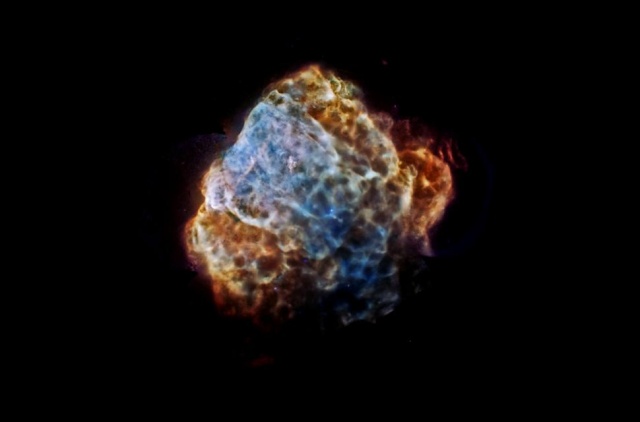
X-Ray Imaging of Supernova Remains
Supernovas are exploding stars, unleashing a massive amount of light, gas, and radiation that can be seen via powerful telescopes from many light years away. The radioactive remains of this supernova were captured via X-ray imaging at NASA’s Chandra Observatory on September 10, 2014.

SUN FLARE

From the view on our tiny, pale-blue dot called Earth, the sun is a bright, warm light. It’s what gives the plants and animals of this planet life, and illuminates our world. The reality, however, is that the Sun is a violent, tumultuous sphere of explosive chemical and nuclear reactions – that’s where all that life-giving heat and light come from. The Sun often emits solar flares – massive bursts of energy that disperse protons into space, and have been known to affect satellites and pose major risk to astronauts. This particular solar flare was captured by NASA’s Solar Dynamics Observatory on December 16, 2014. It’s ironic that something so violent and dangerous can be so beautiful.


BIRTH OF A STAR

The universe is brimming with countless stars, and they all start life as brightly shining Young Stellar Objects (YSO). This photo, taken by everyone’s favorite NASA/ESA space telescope, Hubble, on March 2, 2015, shows the early stages of life for the star V1331 Cyg. The star is still classified YSO, but will soon be approaching its main cycle – the same stage of life as our Sun.

GALACTIC VARIETY

Galaxies are curious things: They contain billions – often trillions – of stars, massive clouds of gas, and innumerable planets, all of them potentially light years apart. But taken in from a vast distance, they become glimmering clusters of multicolored starlight. This photo, again taken by Hubble, shows the beauty of NGC 7715 (and the arm of its companion NGC 7714). The light captured in this photo is over 100 million years old.

THE PILLARS OF CREATION
The Pillars of Creation – a massive nebula of stars, gas, and other materials being radio-actively super heated by the cluster of young stars — is one of the most iconic celestial bodies. An early photo of the nebula showed the enormous, gaseous pillars enshrouding the star cluster. But in early 2015, Hubble snapped this photo using a powerful camera that was able to penetrate the veil radioactive mist and capture the light of the stars behind it.


A MASSIVE BLACK HOLE IN A TINY GALAXY

At the heart of a densely star-packed dwarf galaxy, M60-UCD1, floats this super massive black hole holding it all together. NASA discovered the peculiar galaxy with the help of Hubble, which took the above photo on September 10, 2014. The discovery of this galaxy has lead NASA scientists to believe that there are likely many, many other dwarf galaxies with super massive black holes at their centers.


ANDROMEDA PANORAMA
Andromeda is the nearest galactic neighbor to the Milky Way, Earth’s galaxy. While none of us will ever be able to be physically present in Andromeda (and likely will never occur unless near-light speed travel and/or wormholes are ever discovered), we can still take in the view of the galaxy’s trillion stars – or, at least, the light of said stars from 2.54 million years ago. Hubble telescope captured the impressive photo on January 9, 2015.


SOLAR ECLIPSE


Solar eclipses used to be feared by ancient cultures who didn’t understand what they were or why they occurred; today they’re exciting solar events that bring people flocking to witness them. This photo snapped by ESA’s Proba-2 satellite captured the moment at which the moon covered the sun during a recent solar eclipse over Europe on March 20, 2015.

THE MOON
 Much like the sun, the view of the moon from our terrestrial vantage point can sometimes leave something to be desired, especially once you’ve seen photos like this one, taken at the apex of a full moon during the lunar cycle by NASA’s Lunar Reconnaissance Orbiter on December 9, 2014. The high-definition photo gives a detailed look at the stark gray, crater-ridden surface or Earth’s moon.


Jupiter’s storm

The largest object in our solar system, Jupiter is a behemoth of a planet. Over 1,321 Earths could fit into Jupiter, and the planet is orbited by 16 moons (that we know of). But perhaps the most iconic feature of the gas giant is its massive storm, seen as a red dot circulating across its surface. This image gives us a glimpse of the vibrant and beautiful swirling gas clouds of Jupiter’s storm.


STORMS OVER INDONESIA
It’s easy to forget that Earth itself is capable of inspiring feelings of wonder when looking at photos of massive cosmic objects from distant corners of the universe, but the third rock from the sun is varied, complex, and beautiful. This photo, taken by an astronaut on the International Space Station on August 5, 2014, shows massive thunderheads above Borneo, Indonesia.


Add captionEd White walking in space


Add captionSpace Shuttle Challenger disaster

Add captionApollo 11 ‘Visor Image’Buzz Aldrin, the second man to set foot on the moon, poses while Neil Armstrong uses Buzz’s visor as a mirror in order to take a picture of himself.


Add captionA stunning image of the star cluster Westerlund 2 and gas cloud Gum 29 was chose as the official photo for the Hubble telescope's 25th birthday.
Add captionCleveland Volcano in Alaska
Add captionAmongst their many projects at the time, NASA Ames proposed massive spaceships that would orbit communities of 10,000 people around the earth—planned .

FRIENDS!!!Few things instill a sense of wonder quite like the views from space do. Whether the cameras are turned toward the stars, or back at Earth, there’s something about space photography that makes one feel at once very small, yet connected to something truly powerful. NASA photos show the beauty of Earth, our solar system, and far corners of the universe.


https://www.google.com.sa/
http://www.space.com
http://www.digitaltrends.com/photography/best-photos-of-space/